Updated 26 October 2026 · AUD prices checked against providers
This review contains affiliate links — if you buy through them, Proxiyum may earn a commission at no extra cost to you. Details: Affiliate Disclosure
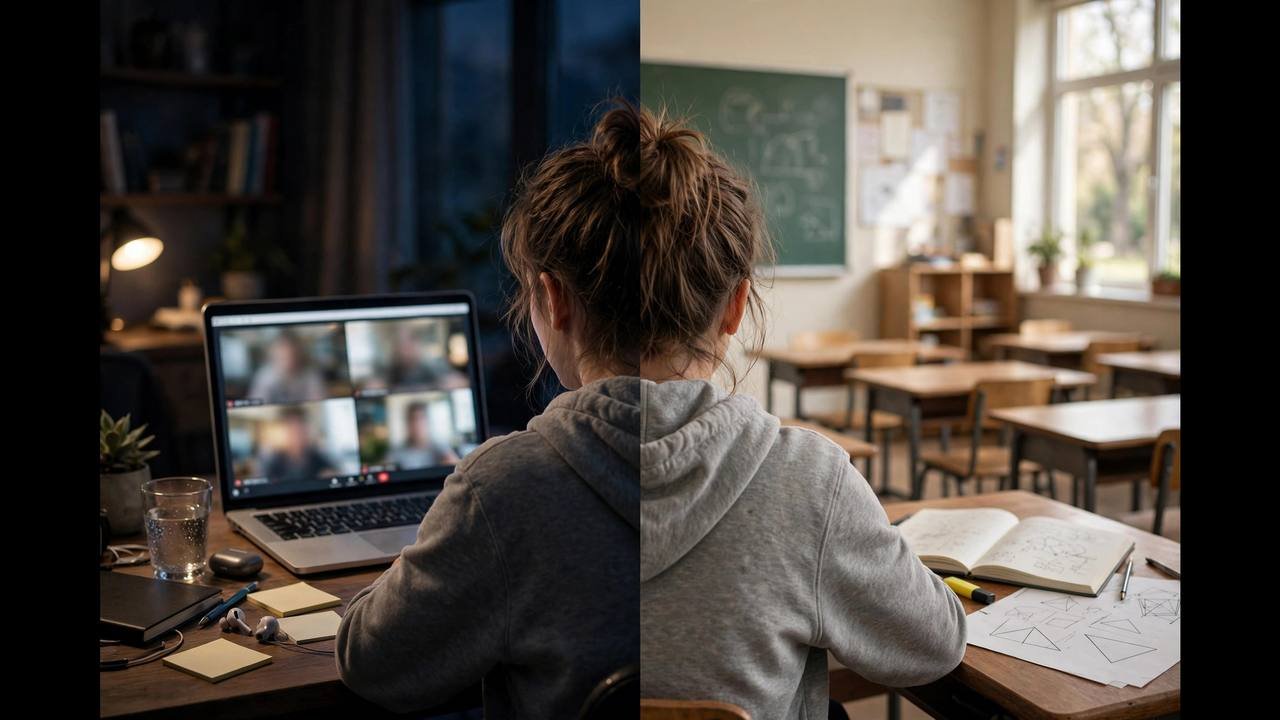
When your child needs extra help, the first decision isn’t which tutor to hire — it’s whether the tutoring should happen online or face to face. The online vs in person tutoring debate has moved well past “is online legit?” The real question now is subtler: which format suits your child, your budget and your family’s logistics? The research has a surprisingly clear answer about effectiveness, but the right choice still depends on your specific situation.
In this guide, we compare online and in-person tutoring honestly — what studies say about results, how the costs stack up in Australia, which students thrive in each format, and how to choose a good tutor either way.
What the Research Says: Does the Format Matter?
Let’s start with the question parents ask most: does online tutoring actually work as well as sitting across the table from a tutor? Across multiple studies, the answer is consistently yes — with some nuance.
A well-known analysis by the U.S. Department of Education found that students in online learning conditions performed modestly better, on average, than those receiving face-to-face instruction. More specifically for tutoring: a 2021 study published in the Journal of Research on Educational Effectiveness found that online high-dosage maths tutoring produced gains comparable to in-person tutoring, with students advancing roughly two grade levels in maths after a single semester of virtual instruction.
A 2023 meta-analysis of 45 studies found that online tutoring produced equivalent or slightly better outcomes in 78 per cent of comparisons with face-to-face tutoring. And research on high-dosage tutoring generally — from Brown University’s Annenberg Institute — shows effect sizes of 0.1 to 0.4 standard deviations, equivalent to 3–15 months of additional learning, with the potential to reduce achievement gaps substantially.
The consistent finding across this research is that the medium isn’t the main variable. What predicts results is the quality of the tutor, the consistency of sessions, the student’s engagement, and the fit between the teaching approach and the child’s needs — not whether the tutor is physically in the room. An excellent online tutor beats a mediocre in-person one every time, and vice versa.
It’s also worth noting what the research emphasises about dosage. The strongest results come from high-dosage tutoring: multiple sessions per week, sustained over at least a semester, ideally with the same tutor building a relationship. A fortnightly session with a brilliant tutor will likely underperform weekly sessions with a merely good one. When budgeting, prioritise frequency and duration over prestige — consistency is the closest thing to a magic ingredient tutoring has.
That said, “equivalent on average” hides real differences for individual children, which is where the honest comparison below comes in.
Online Tutoring: The Honest Pros and Cons
Where online tutoring wins:
- Access to specialists. This is the decisive advantage. Your child can learn from the best physics tutor in the country rather than the only one within driving distance. For niche subjects — Specialist Maths, IB, extension English — this alone can settle the debate, especially for regional families.
- Scheduling flexibility. No travel time for anyone means sessions can fit around sport, music and family life. Rescheduling is usually easier, and short, frequent sessions (which research favours) become practical.
- Cost. Online sessions are typically similar in price to in-person, or slightly cheaper, since there’s no travel time or in-home premium built in. More on Australian pricing below.
- Built-in tools. Interactive whiteboards, shared documents, screen sharing and session recordings can make online sessions more productive than pen-and-paper — and recordings let students revisit tricky explanations.
- Comfort and consistency. Learning from home removes travel logistics entirely. Sessions happen in bad weather, during busy weeks, and even while travelling.
Where online tutoring struggles:
- Focus and accountability. Some students — particularly younger ones or those with attention difficulties — find it much harder to concentrate on a screen. A tutor in the room can redirect wandering attention in ways a video call can’t.
- Tech dependence. A stable internet connection, a working webcam and a quiet space are non-negotiable. Our beginner’s guide to Zoom for online classes covers the setup that makes online sessions run smoothly.
- Hands-on subjects. Anything requiring physical manipulation — certain science pracs, art technique, music performance — translates poorly to video.
- Social connection. Some children simply engage better with a real person in the room, and the rapport that drives motivation can take longer to build online.
In-Person Tutoring: The Honest Pros and Cons
Where in-person tutoring wins:
- Presence and accountability. A tutor sitting beside your child notices the glazed eyes, the fidgeting, the moment confusion sets in — and responds immediately. For students who drift, this physical presence is genuinely valuable.
- Richer interaction. Body language, shared physical materials, and the natural back-and-fouth of working side by side. Younger primary students especially tend to engage more deeply face to face.
- No tech barriers. Nothing to set up, no frozen screens mid-explanation, no “can you hear me?” eating into paid time.
- Clear boundaries. Going to a tutoring centre (or having the tutor arrive) creates a ritual that signals “this is learning time” — helpful for kids who struggle to switch into study mode at home.
Where in-person tutoring struggles:
- Limited choice. You’re restricted to tutors within travel distance, which matters enormously for specialist subjects and senior years.
- Logistics and cost. Travel time for someone — you or the tutor — and in-home sessions typically carry a premium. Centres add commute time to already packed weeks.
- Scheduling rigidity. Missed sessions due to illness or clashes are harder to reschedule, and the week’s rhythm breaks more easily.
- Variable environments. A noisy tutoring centre with thin dividers isn’t automatically better than a quiet bedroom with a good online tutor.
Online vs In Person Tutoring: Cost Comparison for Australia
So what does tutoring actually cost in Australia in 2026? Rates vary widely by tutor qualifications, subject and year level. As a rough picture: private one-on-one tutoring in Sydney ranges from around $40 to $180 per hour, with university-student tutors at the lower end and qualified teachers or specialist HSC/VCE tutors charging more. Marketplaces report averages around $55 per hour, with an overall range of roughly $30–$150. For a detailed breakdown, Erudite Tuition’s 2026 guide to tutoring costs in Australia is a useful reference.
The online vs in-person difference within those ranges is real but modest. Online tutoring is usually priced similarly to in-person, or slightly cheaper — there’s no travel time or in-home premium, and online providers can operate at scale. Some online-first companies publish set rates (for example, per-session pricing with discounts for committed plans), while independent in-person tutors set their own fees.
When comparing costs, think in terms of value per term, not just hourly rate. A cheaper tutor your child doesn’t engage with is the most expensive option of all. And consistency matters more than intensity: one session a week for a full term reliably outperforms a frantic burst before exams. Ask about package discounts, cancellation policies and whether there’s a trial lesson before committing.
Ready to compare?
Compare current prices & course optionsOnline vs In Person Tutoring: Which Students Suit Which Format?
Research says the formats are equivalent on average — but your child isn’t an average. Here’s how to think about fit:
- Online tends to suit: self-motivated students from about Year 5 up; senior students needing specialist subjects; regional and rural families with limited local options; busy families who need scheduling flexibility; students comfortable with technology; and selective test preparation, where the test itself is increasingly computer-based (see our selective school test preparation guide).
- In-person tends to suit: younger primary students; children with significant attention difficulties or who need behavioural redirection; students who are disengaged and need the accountability of physical presence; hands-on learners; and anyone who simply doesn’t focus on screens.
- Either works for: the large middle group of students who are reasonably motivated and need solid, consistent help in mainstream subjects. For these kids, tutor quality dwarfs format.
Age is the strongest practical divider. Most educators find that sustained online learning clicks from around age 10–11, while younger children generally do better with a person in the room. But there are focused eight-year-olds who thrive online and distractible fifteen-year-olds who need someone beside them — know your child.
The Hybrid Option: Best of Both Worlds
You don’t have to choose permanently. Many Australian families now run a hybrid model: weekly online sessions for regular curriculum support, supplemented by occasional in-person intensives before exams or for tricky topics. Or the reverse: a local tutor for general support, plus an online specialist for one difficult subject.
Hybrid also works as a trial strategy. Start online (lower commitment, easier to switch tutors), and move in-person if focus proves to be the issue — or start in-person to build the relationship and rapport, then transition online once the routine is established. Some families also split by subject: online for the specialist senior subject with no good local tutor, in-person for the primary-schooler who needs a steady hand beside them. The format should serve the learning, not the other way around.
Red Flags: When to Walk Away
Not every tutor deserves your money, in either format. Watch for these warning signs:
- Guaranteed results. No honest tutor promises specific grade jumps or selective school offers. Learning depends on too many variables for guarantees — the promise itself is the red flag.
- No diagnostic, no plan. If the first session is just “what homework do you have?”, there’s no strategy. Good tutors assess first, then plan.
- Your child dreads sessions. Some resistance is normal at first, but persistent dread after a month signals a rapport or approach problem. A tutor who can’t build a working relationship with your child can’t teach them effectively.
- No communication with you. You’re paying and you’re the one who sees the report cards. A tutor who never updates you is operating in the dark.
- Homework-machine mode. Sessions that only complete school homework, week after week, aren’t tutoring — they’re supervision. Real tutoring builds underlying skills so the homework gets easier.
- Pressure tactics. Large upfront payments, “limited spots” urgency, or making you feel guilty for asking questions. Professional tutors don’t need these.
Trust your instincts and your child’s feedback. Switching tutors isn’t failure — it’s good consumer sense, and children learn quickly that their learning matters enough to get right.
How to Choose a Good Tutor (Either Format)
Since tutor quality matters more than format, here’s what to actually look for:
- Subject mastery plus curriculum knowledge. A great mathematician isn’t automatically a great Year 10 maths tutor. Look for familiarity with your state’s syllabus — HSC, VCE, QCE or IB — and the specific assessments your child faces.
- Teaching skill, not just credentials. Ask how they diagnose gaps, how they structure a session, and how they handle a student who doesn’t understand. The answers reveal more than a degree does.
- A trial lesson. Most reputable tutors and companies offer one. Watch (or ask your child afterwards): did the tutor listen? Did your child feel comfortable asking questions? Rapport in the first session predicts persistence.
- Clear goals and feedback. Good tutors set specific targets (“fractions confidence by end of term”), track progress, and communicate with you regularly — not just take the booking and disappear.
- Working With Children Check. In Australia, any tutor working with under-18s should hold a valid WWCC (or state equivalent). This is non-negotiable — verify it.
- No lock-in contracts. Be wary of large upfront commitments before you’ve seen results. The best providers let the tutoring earn its continuation.
However you choose, revisit the decision each term. Children’s needs change, tutors’ effectiveness varies by topic, and the format that worked in Year 6 might not be right in Year 10. Ask your child directly what’s working and what isn’t — their honest answer is the most valuable data you have. The families who get the most from tutoring treat it as an active partnership — involved, observant and willing to adjust — rather than a service they outsource and forget.
Before you enrol, run the numbers.
Work out the true cost per hour → Course Cost Calculator