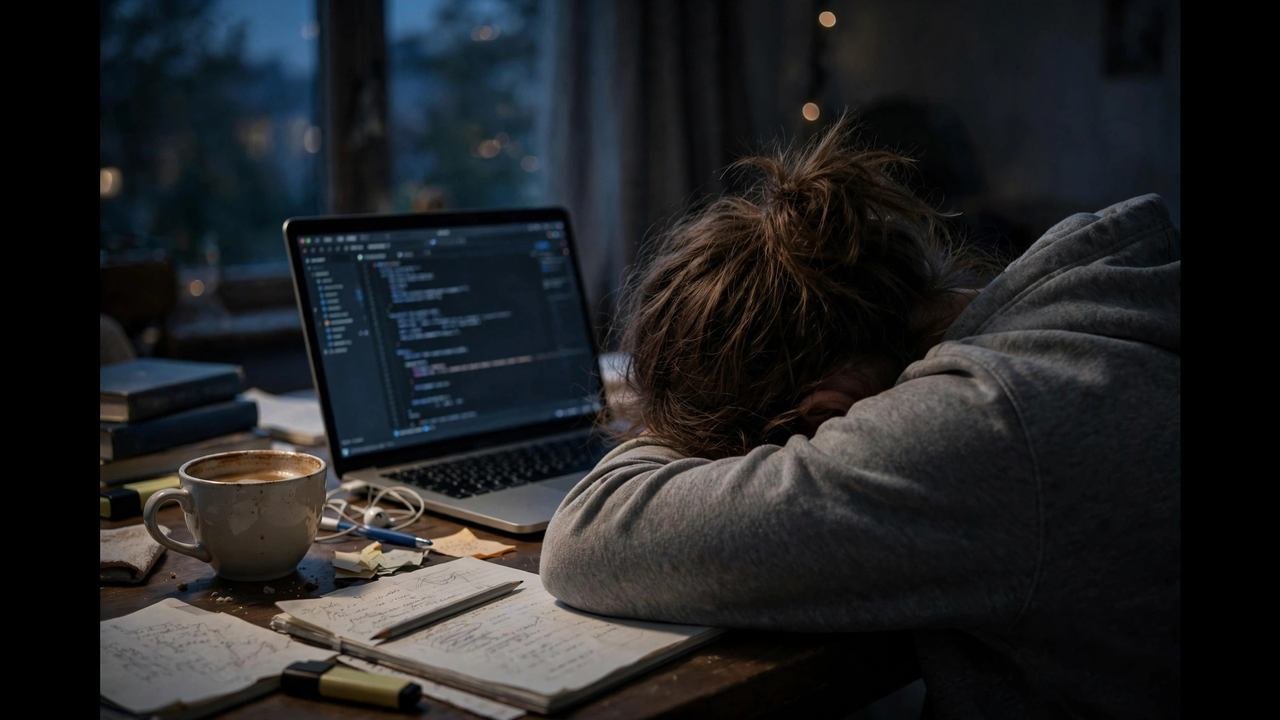
Online learning burnout is the quiet epidemic of digital education. It does not announce itself with a dramatic collapse — it creeps in as a growing dread of opening your laptop, a shortening fuse, a sense that the course you were once excited about has become a weight you carry. Because online study happens alone, at home, with no classmates to normalise the struggle, students routinely misread burnout as laziness or lack of discipline, and respond by pushing harder — which is precisely the wrong treatment.
This guide helps you recognise online learning burnout for what it is, understand why online study is particularly burnout-prone, and recover with strategies that address causes rather than symptoms. It also covers when burnout shades into something that needs professional support, and how to find that support in Australia.
What Burnout Actually Is (and Is Not)
The World Health Organization includes burn-out in the International Classification of Diseases (ICD-11, code QD85) as an occupational phenomenon — notably, not as a medical condition in itself. The WHO defines it as “a syndrome conceptualized as resulting from chronic workplace stress that has not been successfully managed”, characterised by three dimensions: feelings of energy depletion or exhaustion; increased mental distance from one’s job, or feelings of negativism or cynicism related to one’s job; and reduced professional efficacy. You can read the WHO’s full statement on burn-out for the precise definition.
Applied to study, the three dimensions translate directly: exhaustion (tired no matter how much you rest), cynicism/detachment (the course feels pointless; you resent it), and reduced efficacy (concentration shot, simple tasks feel hard, grades slipping despite effort). Burnout is not a bad week, not exam stress, and not ordinary tiredness — it is a state of depletion produced by prolonged, unmanaged pressure. And it is not a personal failing: it is what happens when demands chronically exceed resources, which describes a great deal of online student life.
Why Online Learning Is Especially Burnout-Prone
Online study concentrates several known burnout drivers into one experience:
- Boundary collapse. When your bedroom is your lecture theatre, your library and your exam hall, there is no physical transition between “studying” and “not studying”. The course is always present, which means you never fully recover from it. Commutes, campus walks between classes, even the ritual of packing a bag — these used to be decompression buffers. Online learners get none of them automatically.
- Isolation. Humans co-regulate stress socially. On campus, a venting session with classmates after a brutal lecture discharges pressure; online, the pressure accumulates silently. Isolation also removes the reality check — everyone else looks fine on the discussion board, so your struggle feels uniquely shameful.
- Always-on pressure. Recorded lectures and flexible deadlines sound liberating but create a treadmill with no off switch. There is always another video you could watch, another reading you should do. The absence of a timetable becomes the presence of permanent guilt.
- Screen fatigue. Hours of video lectures, readings, assignments and exams on the same device, often in the same chair, produces a specific drained feeling that a varied campus day does not.
- Invisible effort. Nobody sees you studying at midnight. Partners, family and employers may not grasp the workload, so the effort goes unacknowledged — and unacknowledged effort is a fast track to cynicism, the second burnout dimension.
The Signs Students Miss
Burnout is easiest to treat early and hardest to recognise early, because its first signs masquerade as normal student life. Watch for these, especially in combination:
Physical signs
Persistent fatigue that sleep does not fix. Headaches, muscle tension or stomach issues with no clear medical cause. Getting sick more often — chronic stress suppresses immune function. Changes in sleep (trouble falling asleep despite exhaustion, or sleeping far more than usual) and appetite.
Emotional and cognitive signs
Dread when thinking about study, where there used to be at least neutrality. Irritability disproportionate to its triggers — snapping at housemates over nothing. A sense of detachment or cynicism about the course (“what’s the point of this degree anyway”). Difficulty concentrating: re-reading the same paragraph repeatedly, mind wandering constantly. A noticeable drop in the quality of work despite equal or greater effort.
Behavioural signs
Procrastination that feels different from ordinary delay — not “I’ll do it later” but an almost physical inability to start. Withdrawing from friends, family or the study group. Letting basic maintenance slide: exercise stops, meals get worse, the room deteriorates. Increasing use of alcohol, junk food or endless scrolling as sedation rather than enjoyment.
The critical distinction from ordinary stress: rest does not restore you. A stressed student feels better after a weekend off; a burned-out student returns on Monday feeling exactly as depleted. If that describes you, keep reading — and take it seriously. This is also worth distinguishing from a motivation slump: our guide to staying motivated in a self-paced course covers the motivation side, but motivation tactics cannot fix burnout. Different problem, different treatment.
What Actually Helps: Treating Causes, Not Symptoms
Bubble baths do not cure burnout. Recovery requires changing the conditions that produced it. Work through these in rough order:
1. Name it and stop the bleeding
Acknowledging “I am burned out” is itself therapeutic — it replaces self-blame (“I’m lazy”) with an accurate diagnosis (“my demands exceed my resources”). Then immediately reduce load: defer a non-urgent assignment if extensions are available, drop to fewer subjects next semester, say no to optional commitments. Australian universities have formal mechanisms — special consideration, reduced study loads, leave of absence — that exist precisely for this. Using them is not weakness; it is what they are for.
2. Restore the boundaries
Rebuild the walls that online study dissolved. Set hard study hours and hard stop times — when the laptop closes at 9 pm, it stays closed. Create a shutdown ritual: review tomorrow’s plan, close all tabs, physically leave the study space. Take at least one full day off per week with zero study; “just one quick lecture” on rest days keeps the treadmill running. If possible, study somewhere other than your bedroom occasionally — a library, a café — to break the bed-equals-work association.
3. Reconnect socially
Isolation both causes and deepens burnout, so reconnection is treatment. Rejoin or start a study group, talk to classmates about how the semester is actually going (you will be stunned how many feel the same), and protect non-study relationships fiercely. Tell someone you trust that you are struggling — saying it aloud to a human breaks the shame spiral that keeps burnout hidden.
4. Move your body
Exercise is the single most evidence-backed burnout intervention that is fully in your control. It does not need to be intense: a daily 20–30 minute walk produces measurable improvements in mood, sleep and stress hormones. The mechanism matters less than the consistency. Schedule it like a class, because “when I feel like it” means never, when you are burned out.
5. Fix the structural overload
Long-term recovery means addressing the maths. If you are working full-time while studying two subjects and the result is burnout, the honest fix is usually structural: fewer subjects, fewer work hours, or a semester break — the same honest checkpoints in our guide to balancing full-time work and study. Coping strategies help you survive a hard semester; they cannot make an impossible load possible indefinitely.
6. Rediscover meaning (carefully, later)
Cynicism — the “what’s the point” feeling — lifts last, and only after rest and load reduction. Do not try to positive-think your way out of burnout while still overloaded; it backfires. Once recovery is underway, reconnecting with why you started (career goals, curiosity, the life the qualification enables) helps prevent relapse. But meaning follows recovery; it does not precede it.
When to Seek Professional Help
Burnout and clinical depression/anxiety share symptoms and frequently co-occur. Seek professional support promptly if: low mood or anxiety persists beyond a few weeks despite rest and load reduction; you experience hopelessness, worthlessness or thoughts of self-harm; physical symptoms are significant; or you cannot function in daily life (work, relationships, basic self-care).
In Australia, support is accessible and often free. Start with your university’s counselling service — free, confidential, and experienced specifically with student burnout. Your GP can assess whether what you are experiencing needs clinical treatment and can prepare a Mental Health Treatment Plan, which subsidises sessions with a psychologist through Medicare. For immediate crisis support, Lifeline (13 11 14) operates 24/7, and Beyond Blue (1300 22 4636) offers counselling around the clock. Reaching out is not an admission of failure — it is the same rational step as seeing a physio for a sports injury. You would not try to think your way out of a broken ankle; do not try to think your way out of clinical-level depletion.
The Recovery Timeline: What to Expect
Burnout recovery is slow, and knowing the shape of it prevents the discouragement that causes relapse. Weeks 1–2: stabilisation. Reducing load and restoring sleep usually brings the first relief — the acute exhaustion eases, though motivation remains flat. Do not mistake early improvement for full recovery and reload your schedule; this is the most common relapse trigger. Weeks 3–6: gradual return of capacity. Concentration improves, dread lessens, and study starts feeling possible rather than impossible. Reintroduce commitments slowly, one at a time, watching for warning signs. Months 2–3: rebuilding. Energy and engagement return more reliably. This is when to address the structural causes — the overload, the boundaries, the isolation — so the same pattern does not recur next semester.
Full recovery from significant burnout typically takes weeks to months, not days — roughly proportional to how long the overload lasted. Be patient with the timeline and suspicious of quick fixes. If progress stalls entirely after several weeks of genuine rest and load reduction, that is useful diagnostic information: it suggests something beyond straightforward burnout (such as depression or a medical issue) may be involved, and it is time to involve a professional rather than waiting longer.
Preventing the Next Burnout
Recovery without redesign just schedules the next collapse. Build these structural protections into your study life permanently: a hard weekly rest day with no coursework whatsoever; a realistic weekly study-hours ceiling you treat like a budget; a monthly five-minute self-check against the warning signs listed above; and one trusted person — friend, mentor, counsellor — who has standing permission to tell you when you look depleted. Systems beat willpower every time.
Recovery is only half the job; the other half is building a study life that does not reproduce the conditions. The prevention checklist:
- Sustainable load, verified each semester. Before enrolling, do the honest hours maths including work, sleep and recovery — not just study hours.
- Non-negotiable recovery time built into every week: exercise, a full day off, real holidays between semesters.
- Early warning system: a monthly two-minute self-check against the three dimensions (exhaustion? cynicism? efficacy dropping?). Catching burnout at “mildly crispy” beats treating it at “fully charred”.
- Maintained boundaries even when things are going well — especially then, because good periods are when boundaries quietly erode.
- A life outside the degree: friendships, hobbies, interests that have nothing to do with study. They are not distractions from your education; they are the resilience reserve that makes education sustainable.
- Watch the transitions. Burnout often strikes not during the hardest weeks but just after them — when the adrenaline drops and the accumulated deficit arrives. Be extra gentle with yourself in the week following exams or major deadlines, and resist the urge to immediately fill the freed time with new commitments.
Online learning burnout is common, treatable and — with the right structures — largely preventable. The students who thrive in online study long-term are not the ones who never struggle; they are the ones who recognised the signs early, adjusted the load honestly, and asked for help when they needed it. If this guide described you, start today: name it, reduce something, move your body, and talk to someone. Recovery begins with a single honest step — and every step after gets a little easier as your energy returns. You started this course for a reason worth remembering; give yourself the recovery you need to finish it well. Be patient, be honest about the load, and remember: asking for help is a strategy, not a surrender. The degree is a marathon, not a sprint — and the runners who finish are the ones who learned to pace themselves, rest properly, and keep going — all the way to graduation.